





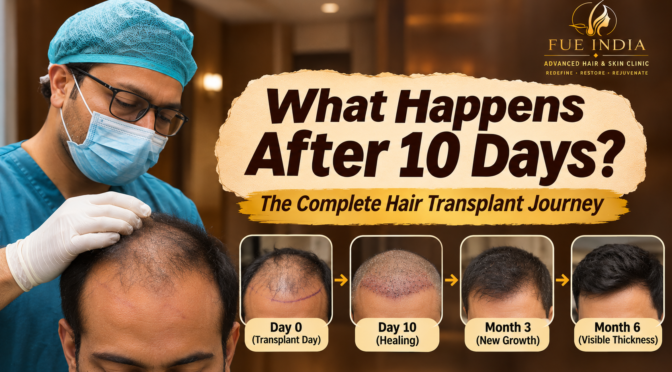
A hair transplant procedure is a small cosmetic surgery that treats hair loss with natural hair growth from your own scalp. The first couple of days need the most care.
After 10 days of hair transplant, your scalp looks calm, the small scabs start to fall, and daily life feels normal again. This stage is a big milestone in hair transplantation.
Hair transplant care after 10 days is easy when you know what is normal and what is not.
What Happens to Your Scalp 10 Days After a Hair Transplant
Most patients experience a clear change in comfort at this stage. The healing process moves fast, both at the recipient area and the donor side.
The hair transplant donor area after 10 days also looks calm. The skin where the grafts were taken is healing well, and short hairs often grow back there.
This donor region heals like any small wound, as donor areas across the scalp do.
Read our full guide on how the donor area heals.
The Scabs Start Falling Off
Small scabs form around each new graft in the first week. Around day 10 or 11, they start to fall off on their own. Never scratch or pull them. Scab removal by hand is one of the biggest mistakes in hair transplant aftercare, because it can pull out a young graft.
If a scab feels stuck, a saline spray can soften it. Ask your clinic first.
Swelling and Redness Settle Down
Swelling is common in the early days after hair transplant surgery. It is at its peak in the first couple of days and shows on the forehead.
By day 10, the swelling and most of the redness have settled. Mild pinkness on the transplanted area can stay a little longer and fades on its own.
The Grafts Become Secure
By the 10-day mark, your hair transplant grafts feel firm and safe. In the first week, the new follicles are delicate and need gentle care.
After 10 days, they sit much deeper in the skin, and the risk of graft dislodgement drops a lot. This is true for every FUE hair transplant.
The hair follicles have taken firm root in the scalp, so a light touch will not harm them.
Some Itching Is Normal at This Stage
Mild itching is part of the process as the scabs dry and fall. Do not scratch the transplanted hairs or the skin around them.
Tap the area gently instead. Your sleeping position still matters, so keep resting on your back. If the itching feels too strong, tell your doctor.
Hair Transplant After 10 Days: What You Can Start Doing Again
Day 10 is where normal life starts to return. You can go back to many normal activities, but the scalp still needs a soft touch.
Washing Your Hair Normally
Washing hair 10 days after hair transplant becomes much easier.
Most clinics allow normal gentle hair washing once the scabs have fallen.
Use lukewarm water and a mild shampoo. Pour water slowly instead of a hard shower jet. Move your fingertips in soft circles and pat dry with a soft towel.
If washing hurts, stop and call your hair transplant surgeon.
Light Exercise Like Walking
Light exercise like walking is usually fine at this stage. It improves blood flow and supports faster healing. But hold off on heavy gym sessions, running, and contact sports for a few more weeks. Heavy sweating can irritate the healing skin and raises the risk of infection. Ask your doctor before you return to hard physical activity.
Wearing a Cap or Helmet Again
A loose, clean cap is usually safe once the scabs have fallen. Make sure the inside is soft and does not press on the transplanted area. Tight helmets need more time. They press on the scalp and trap sweat and dust. Ask your doctor before you wear a helmet again.
Why Some Hair Falls Out After 10 Days (Shock Loss)
Do not panic if you notice transplanted hairs falling out around this time. This is called shock hair loss, or shock loss, and it is completely normal. The trauma of surgery pushes some hairs into a resting phase, so the hair shaft falls out while the follicle stays safe under the skin. Hair transplant shedding in the first couple of weeks is a part of the process for almost every patient. Hair transplant results after 10 days can look thin, but this is not the final picture. The grafts stay alive, and strong new growth comes later.
Your Healing Timeline After 10 Days
Hair transplant recovery follows a fixed pattern. Here is what the months after day 10 usually bring. You can also watch real patient journeys on our video results page.
Weeks 2 to 6: The Shedding Phase
Most transplanted hair falls in this window, so the scalp may look thinner than before. This stage is temporary. The grafts under the skin are healthy and busy preparing new growth.
Months 3 to 4: New Hair Starts Growing
New hair growth starts around month 3 or 4. The first hairs are thin and soft. It is a happy sign that the grafts have survived. Hair growth gets thicker with every passing month.
Months 6 to 9: Visible Thickness
By month 6, the hair transformation becomes clearly visible in photos. The hairline looks fuller, and styling feels easier. Natural hair growth keeps adding density month after month.
Months 12 to 18: Final Results
Most patients see the final result between 12 and 18 months. The new hair looks, feels, and behaves like natural hair. With a simple care routine and healthy habits, the results stay with you for a lifetime.
Warning Signs to Watch For
Problems after a hair transplant are rare when a qualified team does the work. Most hair transplant side effects are mild and fade within days.
Still, you should know the warning signs.
Signs That Need a Doctor’s Attention
Call your clinic quickly if you notice pus around the grafts, spreading redness, fever, or pain that grows day by day. These can be signs of infection.
Ongoing bleeding also needs quick medical help. A small risk of infection stays with any hair restoration surgery, but fast action keeps the healing safe.
When to Contact FUE India
If anything feels wrong at any stage, speak to the FUE India team at once. Early advice stops small problems from growing.
Our doctors check the scalp and guide you on the right next step.
Tips for the Best Results From Day 10 Onwards
Keep Taking Your Medicines on Time
Take every medicine exactly as your doctor prescribed, and do not stop early.
These medicines protect the grafts and support healing. If your doctor suggests minoxidil at a later stage, first learn how minoxidil works and use it only under medical guidance.
Protect Your Scalp From Sun and Dust
Healing skin burns fast, so keep the scalp covered when you step out. A loose cap works well. Sunburn on a healing scalp slows the recovery process and can harm the new grafts.
Avoid Smoking and Alcohol
Smoking slows blood flow to the grafts, and alcohol slows healing too.
Both raise the chance of weak growth. Staying away from them during recovery is one of the best gifts you can give your new hair.
How FUE India Supports You at Every Stage
A hair transplant operation is only half the journey. The aftercare completes it.
At FUE India, Dr. Vikas Chouhan and his team of hair transplant doctors guide you at every stage, from the first sitting to full recovery. Our hair transplant aftercare program gives you clear steps and honest answers at every visit. We use advanced technology for safe graft handling, and our team explains the hair transplant cost clearly before you start.
Some patients also get supportive care like PRP therapy for better healing.
FAQs on Hair Transplant After 10 Days
Is It Normal for Transplanted Hair to Fall Out After 10 Days?
Yes, it is completely normal. Shock loss makes transplanted hair fall in the early weeks. The hair shaft goes, but the follicle stays safe under the skin.
New hair grows back in a few months.
Are the Grafts Safe After 10 Days?
Yes. By day 10, the grafts are well fixed in the scalp. The risk of dislodgement is now low. Still, avoid scratching, rubbing, or pressing hard on the area.
Can I Wash My Hair Normally 10 Days After a Hair Transplant?
In most cases, yes. Use lukewarm water and a mild shampoo with light pressure. A gentle hair wash keeps the scalp clean and helps healing.
Follow the washing plan your clinic gave you.
When Can I Go Back to the Gym After a Hair Transplant?
Light walking is fine around day 10. Wait for your surgeon’s approval before heavy weights, running, or contact sports. For most patients, this gap is a few more weeks.
When Will My New Hair Start Growing?
New growth usually starts around month 3 or 4. It comes in thin at first and gains thickness month after month. The final result shows between 12 and 18 months.
Conclusion
Day 10 is a happy milestone. The scabs fall, the grafts settle, and normal life returns. Stay gentle, take your medicines on time, and give the new follicles the time they need.
If you ever feel unsure, the FUE India team is one call away.
Planning a hair transplant, or feeling unsure during recovery?
Book your Free Consultation with FUE India through our contact page and get a plan built for your hair, with natural results and growth for a lifetime.


