





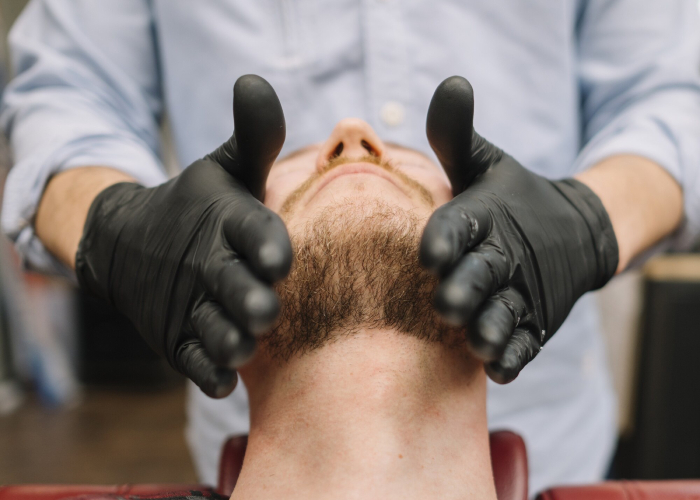
- Fix patchy or uneven beard growth
- Restore beard hair lost due to injuries or burns
- Fill gaps in moustache, goatee, or sideburns
- Achieve a sharp, defined beard style
- Enhance masculinity and facial symmetry
- Improve self-confidence and appearance
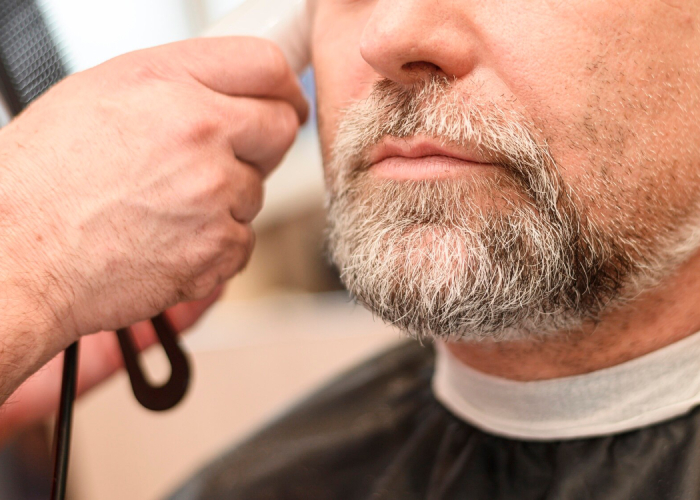
We analyze your face shape, beard pattern, density goals, and preferred style. A personalized design is created based on:
- Jawline structure
- Cheek and chin symmetry
- Desired thickness and outline
Healthy follicles are extracted from the back of the scalp using micro FUE punches (0.7–0.9 mm). These hairs closely match the texture needed for a natural-looking beard.
3. Recipient Site Creation
Micro-incisions are made at precise angles that mimic natural beard hair direction and growth pattern.
4. Graft Implantation
Follicles are implanted one by one to ensure:
- Proper angulation
- Realistic density
- Smooth blending with existing facial hair
- Sharp, clean definition
- Natural & Permanent Results : Transplanted beard hair grows naturally for life.
- No Visible Scars : FUE technique ensures tiny, undetectable extraction points.
- No Visible Scars : Whether you want a full beard, goatee, moustache, or sideburns — we design according to your preference.
- Suitable for All Beard Types : From light stubble to heavy, dense beards.
- Fast Recovery & Minimal Discomfort : Patients resume normal activities within a day or two.
- Boosts Confidence : Creates a stronger, well-defined masculine appearance.
- Patchy or thin beard growth
- Scarred areas without hair
- Irregular or asymmetric beard patterns
- Hormonal or genetic lack of facial hair
- Desire for a fuller, defined, stylish beard
Is the procedure painful?
No. The procedure is performed under local anesthesia, ensuring you remain comfortable throughout. Most patients describe the sensation as mild pressure rather than pain.
How long does the procedure take?
Depending on the number of grafts required, the procedure typically lasts 6–8 hours. Larger sessions may be scheduled across two consecutive days to maintain graft viability and patient comfort.
When will I see results?
Transplanted hair sheds within 2–4 weeks-a normal part of the growth cycle. New growth begins around the 3rd month, with visible thickening by month 6.
Hair transplant results fully mature between 9–12 months with natural density and texture.
Are the results truly permanent?
Yes. Because transplanted follicles are DHT-resistant, they retain this property.
However, existing non-transplanted hair may continue thinning, which is why we may recommend PRP or GFC therapy alongside your hair transplant.
Will there be visible scarring?
FUE techniques leave tiny, dot-like scars in the donor area that are virtually undetectable, even with short hair. There is no linear scar, making this ideal for patients who prefer buzz cuts or shorter styles.
Can women undergo hair transplantation?
Absolutely. Female pattern hair loss requires a different diagnostic approach and our team is experienced in addressing diffuse thinning, receding hairlines and traction alopecia in women.
What is the recovery time?
Most patients resume non-strenuous work within 3–5 days. Strenuous exercise should be avoided for two weeks. Tiny crusts around grafts fall off naturally within 10–14 days.
How do I know if I'm a suitable candidate?
Ideal candidates have sufficient donor hair, realistic expectations and good general health.
During your consultation, we evaluate these factors thoroughly and discuss alternative or complementary options if hair transplant surgery isn't immediately suitable.


