





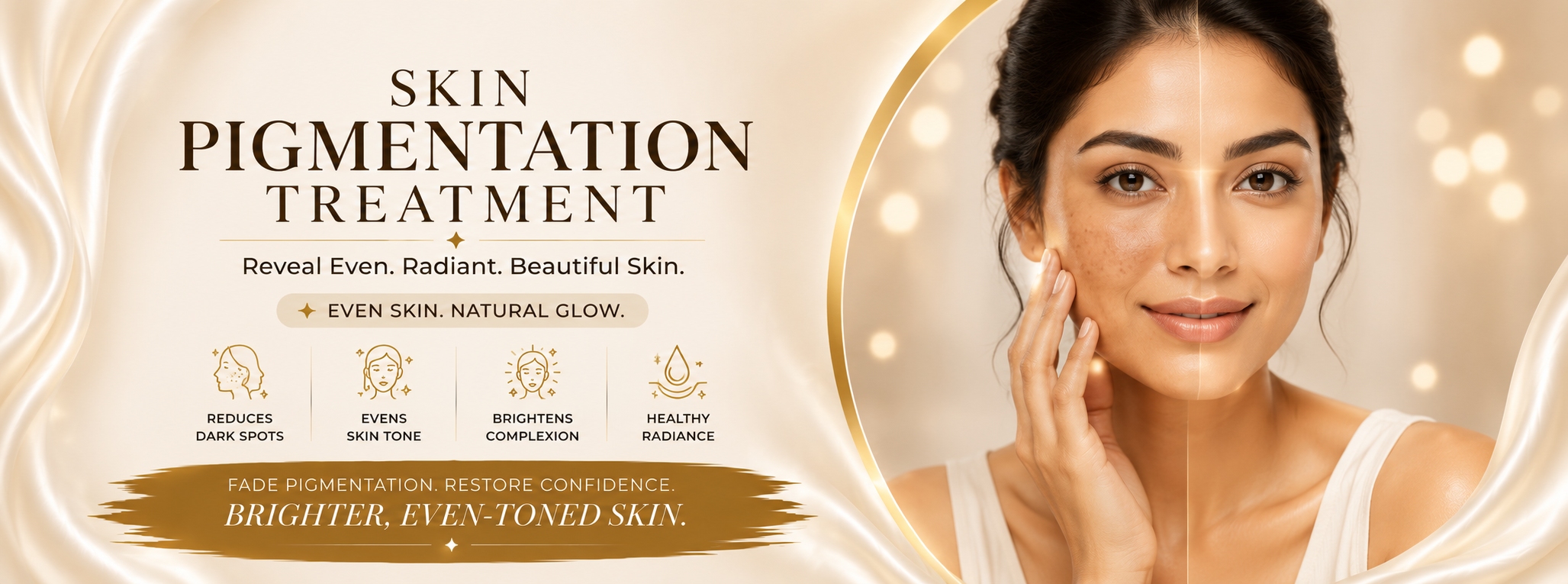
Uneven skin tone, dark patches, and persistent discoloration occur when melanin — the natural pigment that gives skin its color — is produced in excess or distributed irregularly. At FUE India, we approach pigmentation correction with the same precision and care that defines our hair restoration work. Under the guidance of Dr. Vikas Chouhan, our dermatology team designs medically supervised treatment protocols that address pigmentation at its source rather than merely masking surface symptoms.
Every patient receives a thorough skin assessment before treatment begins. We examine your pigmentation pattern, skin type, medical history, and lifestyle factors to build a plan that is genuinely personalized — not a one-size-fits-all approach. Whether your concern stems from years of sun exposure, hormonal shifts, post-acne marks, or the natural aging process, we offer solutions calibrated for Indian skin tones and conditions.
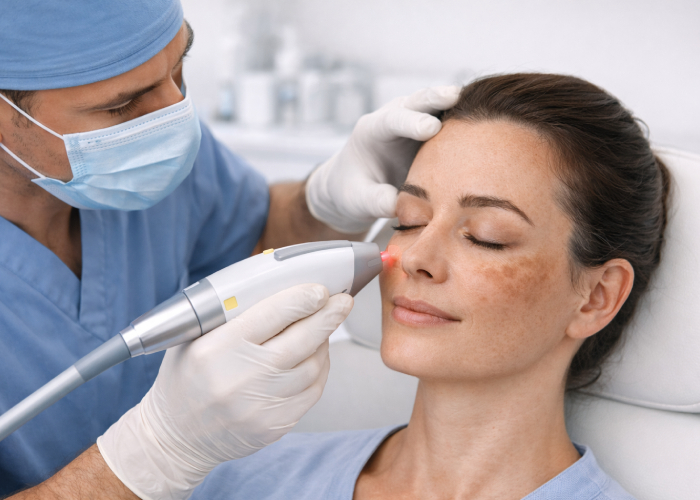
- Melasma : Symmetrical brown or gray-brown patches that typically appear on the cheeks, bridge of the nose, forehead, chin, and above the upper lip. Frequently triggered by pregnancy, oral contraceptives, or sun exposure, and tends to be persistent without proper management.
- Sunspots (Solar Lentigines) : Flat, well-defined tan to dark brown spots that develop on sun-exposed areas such as the face, hands, shoulders, and arms. These are cumulative effects of UV radiation over time, not age alone.
- Post-Inflammatory Hyperpigmentation (PIH) : Darkened areas that remain after acne lesions, eczema flare-ups, insect bites, or minor skin injuries have healed. PIH is particularly common and pronounced in darker skin types.
- Freckles (Ephelides) : Small, light brown spots that appear on sun-exposed skin, often in individuals with lighter complexions or genetic predisposition. Unlike sunspots, freckles may fade with reduced sun exposure.
- Generalized Uneven Tone : Diffuse darkness or mottled discoloration across the face without distinct patch borders, often resulting from a combination of environmental damage, oxidative stress, and inadequate skincare.
- Ultraviolet Radiation : The single most significant external factor; UV rays stimulate melanocyte activity, leading to darkening of existing spots and formation of new ones.
- Hormonal Fluctuations : Pregnancy, polycystic ovary syndrome (PCOS), thyroid disorders, and certain medications can disrupt melanin regulation.
- Post-Acne or Skin Trauma : Inflammation triggers melanin overproduction as part of the healing response, leaving behind stubborn marks.
- Genetic Predisposition : Family history influences baseline melanin levels and susceptibility to conditions like melasma.
- Chronological Aging : Decades of cumulative sun exposure and slower cell turnover contribute to age-related pigmentation irregularities.
- Medication-Induced Pigmentation : Certain antibiotics, chemotherapy agents, antimalarials, and topical preparations can cause hyperpigmentation as a side effect.
- Inflammatory Skin Conditions : Chronic conditions like eczema, psoriasis, or allergic contact dermatitis can leave residual discoloration.
- Q-Switched & Fractional Laser Therapy : Targeted laser energy is absorbed by excess melanin, breaking it into microscopic particles that the body gradually clears through natural lymphatic processes. Suitable for deeper, stubborn pigmentation and selected with caution for Indian skin phototypes.
- Medical-Grade Chemical Peels : Superficial to medium-depth peels containing glycolic acid, salicylic acid, kojic acid, or trichloroacetic acid (TCA) accelerate exfoliation of pigmented keratinocytes and stimulate healthy cell renewal from beneath.
- Clinical Brightening Facials (Medifacials) : Physician-formulated facial protocols that combine gentle exfoliation, antioxidant infusion, and melanin-inhibiting actives to improve luminosity without aggressive downtime.
- Microneedling with Targeted Serums : Controlled micro-injuries created via fine needles trigger the skin’s repair cascade, enhancing penetration of brightening agents like vitamin C, tranexamic acid, and niacinamide while promoting collagen remodeling.
- Prescription Topical Regimens : Custom-compounded creams and serums containing hydroquinone (where appropriate), azelaic acid, arbutin, or retinoids, prescribed based on your specific pigmentation type and tolerance.
- Integrated Combination Protocols : For moderate to severe or mixed pigmentation, we often sequence multiple modalities — for example, a series of peels followed by laser sessions and maintenance topicals — to achieve more comprehensive and durable outcomes than any single treatment alone.
- Calibrated for Indian Skin : Our protocols account for higher melanin content and greater PIH risk, minimizing adverse effects while maximizing efficacy.
- Multi-Layer Correction : Addresses both epidermal (surface) and dermal (deeper) pigmentation components for thorough, lasting improvement.
- Minimal Downtime Options : Many of our treatments allow you to return to daily activities the same day or within 24–48 hours.
- Holistic Skin Enhancement : Beyond pigmentation correction, patients typically notice improved texture, refined pores, and a healthier overall complexion.
- Sustainable Outcomes : Results are designed to endure with consistent sun protection and adherence to prescribed home care.
- Individualized Protocol Design : No two skin profiles are identical; your treatment frequency, intensity, and product selection are adjusted throughout your journey.
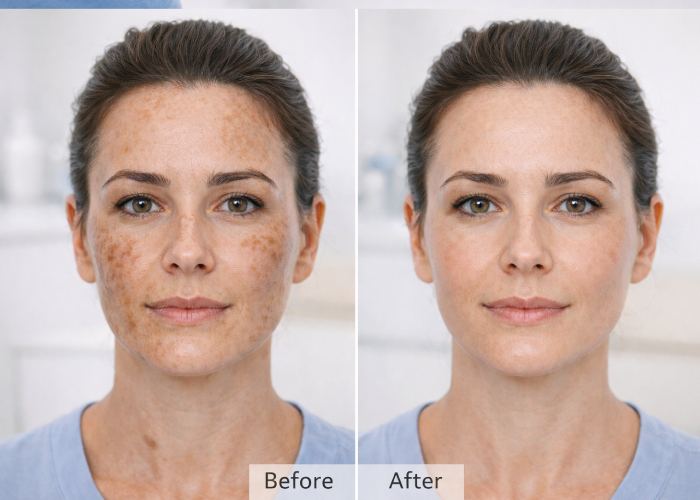
- Progressive fading of dark patches and spots over 2–6 weeks following each session
- Increasing uniformity in skin tone and a visible reduction in contrast between pigmented and normal areas
- Smoother skin surface as exfoliation and cell turnover improve
- Diminished intensity of discoloration with each successive treatment
- Consistent Sun Protection : Broad-spectrum SPF 30 or higher applied every morning and reapplied every 2–3 hours during outdoor exposure. This is non-negotiable for maintaining results.
- Limit Direct Sun Exposure : Seek shade during peak UV hours (10 AM – 4 PM) and wear wide-brimmed hats when outdoors for extended periods.
- Adhere to Prescribed Skincare : Use only the cleansers, moisturizers, and actives recommended by our team; avoid introducing new products without consultation.
- Maintain Skin Hydration : A well-hydrated barrier recovers faster and responds better to treatment. Drink adequate water and use non-comedogenic moisturizers.
- Gentle Handling : Avoid picking, scrubbing, or using harsh physical exfoliants on treated areas until cleared by your dermatologist.
Is pigmentation treatment painful?
Most procedures involve minimal discomfort. Laser treatments may produce a brief snapping sensation; peels create mild tingling or warmth. We apply topical numbing agents when needed, and our team monitors your comfort throughout every session.
How soon will I see results?
Some patients notice initial brightening within 7–10 days after chemical peels or medifacials. Laser and microneedling results typically become visible after 2–4 weeks as the skin heals and clears fragmented pigment. Deeper pigmentation requires patience — significant improvement is usually apparent by the third or fourth session.
Can pigmentation return after treatment?
Pigmentation is a dynamic condition influenced by sun exposure, hormones, and genetics. While our treatments substantially reduce existing discoloration, maintenance sessions and strict photoprotection are essential to prevent recurrence. Think of it as ongoing skin health management rather than a single permanent fix.
Is laser safe for darker Indian skin tones?
Yes — when performed with appropriate wavelength selection, conservative energy settings, and experienced operators. Dr. Chouhan's team has extensive experience treating Fitzpatrick skin types III–V and employs protocols specifically designed to minimize post-treatment hyperpigmentation risk.
What is the difference between a chemical peel and a laser treatment?
Chemical peels work by accelerating surface exfoliation and are excellent for superficial pigmentation, texture improvement, and overall brightening. Lasers penetrate more precisely to target deeper melanin deposits. During your consultation, we determine which modality — or combination — aligns with your pigmentation depth, skin sensitivity, and recovery preferences.
Can I wear makeup after treatment?
For superficial treatments like light peels or medifacials, mineral makeup can typically be applied after 24 hours. Following laser or deeper peels, we recommend avoiding makeup for 48–72 hours to allow the skin barrier to recover without irritation.
Do you treat pigmentation on body areas other than the face?
Absolutely. We regularly address pigmentation on the neck, décolletage, hands, arms, and back. The treatment approach is adapted to the skin thickness and sun exposure patterns of each area.
How do I know which treatment is right for me?
The only reliable way is through an in-person skin analysis. During your consultation at FUE India, we use diagnostic assessment (including Wood's lamp examination where indicated) to determine whether your pigmentation is primarily epidermal, dermal, or mixed — and design your protocol accordingly.


