





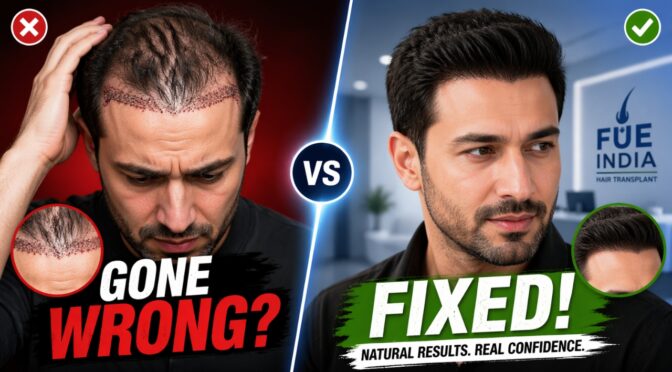
Undergoing a hair restoration procedure is a major decision meant to restore your hairline, appearance, and self-confidence. When performed by experienced, board-certified hair transplant surgeons, modern procedures deliver permanent, natural-looking results. However, as demand for hair restoration has surged globally, so has the rise of low-cost, unqualified clinics operating without medical oversight.
Experiencing a hair transplant gone wrong can be emotionally distressing and physically frustrating. Patients are often left dealing with unnatural “doll-like” hairlines, patchy coverage, visible scarring, or severe scalp damage.
At FUE India, our senior medical team specializes not only in primary hair transplantation but also in complex revision and corrective hair transplant surgery. If you or someone you know has suffered a botched procedure, rest assured that modern corrective techniques can repair the damage and restore a natural appearance.
Clear Signs of a Failed Hair Transplant
A successful hair transplant blends seamlessly with your remaining natural hair—making it impossible for anyone to tell you had surgery. When a procedure fails, distinct physical red flags emerge across the scalp:
1. Unnatural or “Pluggy” Hairline Design
The front hairline requires meticulous artistic planning. Unskilled practitioners often make the mistake of placing large multi-hair follicular units (3–4 hair grafts) directly along the frontal border, creating a harsh “doll hair” or “pluggy” look. Additionally, placing the hairline too straight or unrealistically low compromises natural facial symmetry.
2. Incorrect Hair Growth Direction and Angles
Natural hair grows at specific, acute angles relative to the scalp (typically 10 to 15 degrees at the frontal hairline). If grafts are inserted perpendicular (90 degrees) or tilted incorrectly, the hair grows upright or wild, making it impossible to comb or style naturally.
3. Overharvested or Patchy Donor Area
The donor zone (back and sides of the scalp) contains a finite supply of healthy hair follicles. Unqualified technicians who extract too many grafts from a concentrated zone leave visible moth-eaten patches, thin spots, or severe scarring across the donor region.
4. Poor Graft Survival and Low Density
If hair grafts are mishandled during extraction, stored improperly out of body, or damaged during placement (transection), the follicles die before taking root. This results in patchy, thin, or absent growth despite undergoing a full surgical procedure.
5. Severe Scarring or Scalp Cobblestoning
Improper incision depth or excessive trauma leads to ridging, raised bumps (“cobblestoning”) around graft insertion sites, or large linear scars from poorly executed strip (FUT) surgeries.
What Causes a Hair Transplant to Go Wrong?
Understanding why hair transplants fail helps patients select qualified clinics and prevent costly mistakes:
- Unqualified Technicians Performing Surgery: Many low-cost commercial clinics allow non-medical technicians to conduct incisions and graft placements without doctor oversight.
- Poor Graft Handling & Dehydration: Hair follicles are delicate living tissues. If kept out of nutrient solution for too long or subjected to excessive physical force, graft survival rates plummet.
- Inadequate Pre-Operative Planning: Failing to assess donor hair density, scalp elasticity, or underlying progressive pattern baldness leads to poor design and premature donor depletion.
- Neglecting Post-Op Care: Failing to follow strict post-operative washing, activity restrictions, and medication protocols can displace freshly planted grafts or trigger infections.
How to Fix a Bad Hair Transplant: Revision & Corrective Solutions
If you have suffered a botched hair surgery, do not lose hope. Advanced hair restoration techniques at FUE India allow skilled surgeons to correct past mistakes through targeted revision procedures:
1. Graft Extraction and Redistribution
Incorrectly placed or “pluggy” hair grafts along the hairline can be delicate extracted individually using micro-FUE tools. These larger grafts are dissected into fine, single-hair units under microscopic precision and re-implanted into appropriate zones with proper alignment.
2. Softening the Hairline with Fine Single Grafts
To fix a harsh, straight, or low hairline, surgeons harvest ultra-fine single-hair follicles from the donor zone and plant them in a feathered, irregular micro-pattern ahead of the unnatural line. This creates a soft, natural transition zone.
3. Repairing an Overharvested Donor Area
For patients with patchy donor zones due to aggressive harvesting, body hair transplantation (harvesting healthy grafts from the beard or chest) or scalp micropigmentation (SMP) can fill in depleted areas and balance overall scalp visual density.
4. Scar Camouflage Techniques
Wide linear FUT scars or FUE dot scarring can be concealed by transplanting fresh hair grafts directly into the scar tissue or using medical micropigmentation to blend the area seamlessly with surrounding hair.
5. Adjuvant Therapy: PRP for Poor Density
In cases where graft survival is weak, adjuvant treatments like Platelet-Rich Plasma (PRP) Therapy help revive dormant tissue, stimulate localized blood circulation, and strengthen existing follicles.
How to Avoid a Botched Hair Transplant
Prevention is always better than correction. When researching hair restoration clinics, ensure you follow these safety standards:
- Verify Doctor Qualifications: Ensure your procedure is performed directly by qualified plastic surgeons or dermatologists experienced in hair restoration—not technicians.
- Review Real Patient Results: Examine actual before-and-after photo portfolios and video testimonials showing hairline close-ups and donor area healing.
- Prioritize Safety Over Cheap Prices: Extremely low per-graft pricing is often a warning sign of compromised hygiene standards and outsourced technician labor.
- Demand Custom Hairline Designing: Choose a clinic that customizes hairline planning based on your age, facial structure, and long-term hair loss progression. Learn more about our approach to Hairline Designing.
Frequently Asked Questions (FAQs)
Can a failed hair transplant really be fixed?
Yes. In the majority of cases, revision hair transplant surgery can remove misplaced grafts, reconstruct natural hairlines, and camouflage donor scarring. A thorough clinical assessment is required to evaluate remaining donor hair supply.
How long should I wait before getting corrective hair surgery?
Patients should generally wait 8 to 12 months after their initial procedure. This allows the scalp to heal fully, inflammation to settle, and the final results of the previous surgery to become completely visible.
Why does hair grow in the wrong direction after a bad hair transplant?
Hair direction is determined entirely by the angle and orientation of micro-incisions made by the surgeon. If slits are created perpendicular or angled improperly, transplanted hair grows unnaturally.
Is corrective hair transplant surgery more expensive than a primary procedure?
Revision surgery often requires higher surgical expertise and time to extract misplaced grafts, repair scar tissue, and harvest alternative donor sources (such as beard hair). A personalized quote is provided following clinical consultation.
Conclusion: Reclaim Your Hair Confidence with FUE India
A bad hair transplant can be disheartening, but it does not have to be permanent. With precise surgical revision, expert graft redistribution, and compassionate care, your hair can be restored to look completely natural.
At FUE India, our senior medical team has successfully repaired hundreds of botched procedures for patients across the country. Visit our specialized centers in Kolkata, Siliguri, Ranchi, Bhopal, and Guwahati.
Do not let a bad procedure define your look. Book a confidential consultation with our doctors today and take the first step toward fixing your hair transplant.


