





A hair transplant is a simple and safe way to get your hair back.
After the surgery, your scalp needs care and rest. One of the most important things people forget is how they sleep.
The way you sleep after a hair transplant can help your new grafts stay safe. It can also help you heal faster and feel less pain.
At FUE India, our top doctors have helped many people get natural results.
We are known as the Best Hair Transplant clinic because we care about every small step of your recovery. Many patients ask us about the right sleep position, pillow height, and when they can return to normal rest. In this guide, we will explain how to sleep after a hair transplant so your results last for a lifetime.
Why Does Sleep Position Matters After A Hair Transplant?
Protecting the Newly Transplanted Grafts
During a hair transplant, tiny grafts are placed into your scalp.
These grafts are soft and gentle in the first few days. If you sleep on your stomach or side, the pillow can rub against them. This may move or damage the grafts.
Sleeping the right way keeps them in place and helps them grow strong.
Reducing Swelling and Discomfort
After the surgery, it is normal to have some swelling on the forehead or around the eyes. Sleeping with your head raised helps the extra fluid flow down.
This lowers swelling and makes you feel better.
Promoting Faster Healing
When your scalp is safe and clean, it heals faster. Good sleep and the right position give your body the rest it needs. At FUE India, we always tell our patients that small habits like sleeping correctly can lead to the best results.
How to Sleep After Hair Transplant: Best Positions
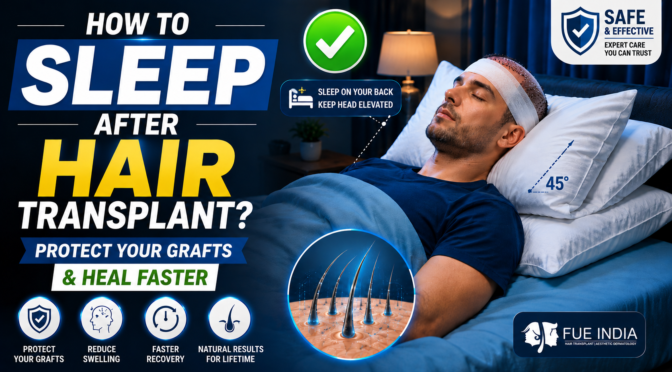
Sleep On Your Back With Your Head Elevated
The best way to sleep after a hair transplant is on your back. Keep your head higher than your body. You can use two or three pillows for this.
This position protects the grafts and keeps swelling low.
Use A Travel/Neck Pillow to Avoid Side Pressure
A travel pillow or neck pillow can help you stay in one position. It stops your head from rolling to the side while you sleep.
This is very helpful during the first few nights when your grafts are most sensitive.
Keep Your Head Above Heart Level For the First 3–5 Nights
Try to keep your head above the level of your heart for at least three to five nights. This helps blood flow and lowers pressure on the scalp.
It also helps reduce swelling around the face.
Avoid Sleeping On Your Stomach Or Sides
Sleeping on your stomach puts direct pressure on the grafts. Sleeping on your side can rub the transplanted area. Both should be avoided during the first week to ten days.
Once your doctor says it is safe, you can slowly return to your normal position.
Night-by-Night Sleep Timeline After Your Hair Transplant
First 1–3 Nights: Maximum Elevation and Care
The first three nights are very important. Sleep on your back with your head raised high. Use extra pillows or a recliner chair if needed. Do not touch the transplanted area.
If your doctor has given you a protective bandage, keep it on as told.
Nights 4–7: Gradual Reduction in Pillow Height
After the first three nights, you can start lowering your pillows slowly. Still sleep on your back, but you do not need to keep your head as high.
Continue to avoid touching or rubbing the grafts.
After 10–14 Days: Returning to Normal Sleeping Habits
By the end of the second week, most people can sleep in their normal position again.
However, always check with your doctor at FUE India before making changes. Every person heals differently, and our team will guide you at every step.
What to Avoid While Sleeping After A Hair Transplant
Touching, Scratching, Or Rubbing the Transplanted Area
Your scalp may feel itchy as it heals. But do not scratch or rub it. This can pull out the grafts and cause scarring. If the itching is too much, talk to your doctor for advice.
Using Regular Cotton Pillowcases
Cotton pillowcases can be rough and may pull on the grafts. They can also carry dust and germs. Use a clean, soft pillowcase made of silk or satin.
This lowers friction and keeps your scalp clean.
Sudden Head Movements While Getting In and Out of Bed
Move slowly when you get up or lie down. Sudden movements can put pressure on your scalp. Take your time and use your hands for support.
Sleeping with Pets or in Dusty Environments
Pets and dust can cause infection. Keep your bedroom clean during recovery. Do not let pets sleep on your bed until your scalp has fully healed.
Tips to Improve Sleep Quality During Hair Transplant Recovery
- Keep the room cool and comfortable: A cool room helps you sleep better. It also lowers sweating, which can irritate the scalp. Set the temperature to a level that feels comfortable for you.
- Take prescribed medications as directed: Your doctor may give you pain medicine or antibiotics. Take them exactly as told. This will help you sleep without pain and lower the chance of infection.
- Stay hydrated and avoid caffeine before bed: Drink enough water during the day. Avoid tea, coffee, and soft drinks in the evening. Caffeine can keep you awake and disturb your rest.
- Use a clean, soft pillowcase: Change your pillowcase every day or every other day. A clean pillowcase protects your scalp from dirt and germs. Choose a soft fabric to avoid rubbing the grafts.
Common Mistakes People Make When Sleeping After A Hair Transplant
- Removing the protective bandage too early: Some patients remove the bandage because they think it is not needed. But the bandage protects the grafts and lowers swelling. Keep it on until your doctor says it is safe to remove.
- Sleeping without head elevation: Many people ignore the advice to keep their head raised. This can cause more swelling and delay healing. Always sleep with your head raised during the first few nights.
- Using dirty pillows or sheets: Dirty bedding can carry bacteria. Always use fresh and clean sheets and pillowcases. This is a simple but important step in protecting your new grafts.
When Can You Sleep Normally After A Hair Transplant?
Most patients can return to their normal sleeping position after ten to fourteen days.
But this depends on how fast your scalp heals. Some people may need more time. At FUE India, our doctors will check your progress and tell you when it is safe to sleep as usual.
Remember, getting natural results takes care and patience.
The first two weeks after surgery are the most important. Sleeping the right way helps protect the grafts and gives you the growth for lifetime that FUE India promises.
FAQ’s:
How Should I Sleep After A Hair Transplant?
You should sleep on your back with your head raised above your heart. Use extra pillows or a neck pillow to stay in place. This protects the grafts and lowers swelling.
How Long After A Hair Transplant Can I Sleep Normally?
Most people can sleep normally after ten to fourteen days. But it is best to ask your doctor at FUE India before changing your sleep position.
Can I Sleep On My Side After A Hair Transplant?
You should avoid sleeping on your side for the first seven to ten days. Side sleeping can rub the grafts and slow healing. Wait for your doctor’s approval.
What Happens If I Accidentally Sleep On My Stomach After A Hair Transplant?
If it happens once, do not panic.
Check your scalp for any bleeding or loose grafts. Contact FUE India if you notice anything wrong. Try to sleep on your back again the next night.
Is It Necessary to Use A Neck Pillow After A Hair Transplant?
A neck pillow is not required, but it can help. It keeps your head stable and stops it from moving to the side. Many patients find it useful during the first few nights.
Conclusion
Sleeping the right way after a hair transplant is a simple step that makes a big difference.
It protects your grafts, lowers swelling, and helps you heal faster. At FUE India, we are committed to giving you the Best Hair Transplant experience with natural results that last.
If you are planning a hair transplant or have questions about recovery, book your Free Consultation with FUE India today. Our expert team is ready to guide you toward safe, lasting, and natural hair growth. Follow the sleep tips shared in this guide, attend your follow-up visits, and ask questions whenever you need help.
Your journey to fuller, healthier hair starts with the right care.


